
The US launched an investigation, focusing on whether the tax in India and other countries discriminated against American companies, were retroactive, and reflected unreasonable tax policy.

The Centre for Strategic and International Studies recommended the United States to undertake a comprehensive policy review to determine how to assist India with developing its defense industrial base through co-production and co-development projects.

US said access to affordable health care entails a large number of factors from rates, logistics to insurance reforms.

'Any finality in such matters requires political views. We will review it closer to the full Budget.'

India had been engaged in a contentious battle with the US over the issue, especially in the pharmaceutical sector.

The Trump administration terminated India's designation as a beneficiary developing nation under the Generalized System of Preferences in June.


'The race is now on for Indian IT firms to develop their AI prowess and focus on a software-first approach to services as the people element becomes more complicated with Trump's expected new regulations.'

The unilateral pressure by US administration on India, at the behest of US Business Associations lobby through US International Trade Commission investigations and request to USTR to enlist India under Priority Foreign Country under Special 301 review, lacks legitimacy under WTO framework, the signatories to the letter said.

India has been relatively insulated from the severe headwinds in the West. However, with a third of the global economy expected to slip into recession in calendar year 2023, the impact will strongly be felt on India's exports and trade economy, leading economists said in a panel discussion at the Business Standard BFSI Insight Summit in Mumbai on Wednesday. The panel comprised former Reserve Bank of India executive director and former Monetary Policy Committee member Mridul Saggar, State Bank of India Chief Economic Advisor Soumya Kanti Ghosh, Citibank India Chief Economist Samiran Chakraborty, ICRA Chief Economist Aditi Nayar, and IndusInd Bank Chief Economist Gaurav Kapoor. The topic of the panel discussion was No recession in sight: Is India decoupled from developed economies?

The banking system's liquidity slipped into deficit for the first time in the current financial year (2023-24) due to the imposition of the Incremental Cash Reserve Ratio (I-CRR) for banks and outflows from goods and services tax (GST) payments, according to dealers. Reserve Bank of India (RBI) data shows it injected Rs 23,644 crore on August 21. The last time liquidity was in deficit was on March 27, when the RBI injected Rs 45,575 crore.

This time, RBI can cut rates to reflect the improved fundamentals and to further shrink the arbitrage window.

'I am optimistic about the Budget because of the fiscal discipline the government has committed to.'

Market participants attribute the stability to the Reserve Bank of India's timely intervention in the foreign exchange market, both in terms of selling and buying dollars.

India and the US on Sunday agreed to enhance their engagement on intellectual property rights, a vexed issue between the two countries.

The World Bank's latest review of its purchasing power parity (PPP) baseline will reignite the poverty debate.
.jpg)
The partially convertible rupee closed at 63.37/38 per dollar compared with 62.83/84 on Monday. The unit dropped 0.85 per cent on the day, its biggest single-day fall in two weeks.

Why did the political system in the country react to these two decisions of the Modi government in a diametrically opposite manner? asks A K Bhattacharya.

The central bank's currency management will be critical over the next few months. A weaker rupee could help to revive exports. But, the currency must fall slowly and in controlled fashion, says Devangshu Datta.

In an address at the Indian Council of World Affairs, he said Nepal wants to take the relations with India to the next level, but at the same time added: "We should be mindful equally that healthy relations require continuous nurturing, creative thinking, promptness and readiness to understand each other in changing dynamics."

On the sectoral front, rate-sensitive sectors such as Bankex and Auto gained by 1% and 0.7% respectively while BSE Consumer Durables gained 1.4%.

Asserting that Article 370 is a thing of the past, Shah stated that no one can bring it back.

Market participants do not expect any immediate impact on the rupee from the Reserve Bank of India's (RBI's) a "comprehensive" master direction aimed at strengthening the framework for hedging foreign exchange risks. RBI Governor Shaktikanta Das, in his monetary policy statement, revealed that the central bank is poised to issue a master direction to consolidate guidelines for all types of forex transactions. But this development, according to market players, is more of a directional guidance than a mandatory directive.

The central government's Great Nicobar development project, proposed around an unprecedented transhipment port, will be executed to keep environmental impact minimal, and is essential as it is of national importance, the government has said amid calls to abort the controversial project due to ecological concerns, the Centre said in an official statement.

Leading economists have pencilled in a high 13-15.7 per cent uptick in the economy in the first quarter of 2022-23 with an upward bias. Soumya Kanti Ghosh, the group chief economic adviser at State Bank of India, on Tuesday said he expects the GDP to clip past 15.7 per cent in the first quarter with more chances of the final numbers printing in higher, while Aditi Nayar, the chief economist at the rating agency Icra, said the economy will grow much lower at 13 per cent in the June quarter. The national statistical office will announce the first quarter GDP numbers later next week.

Market players attribute the rally in small and midcaps to flows from retail investors and domestic institutions.

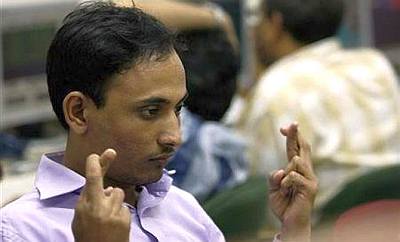
The 30-share Sensex provisionally ended at 15,485.40 down 351.07 points or 2.2% and the 50-share Nifty ended at 4,646.35 down 100 points or 2.1%.

For the first time in 21 years, the Reserve Bank of India (RBI) will revise norms for investment portfolios of commercial banks to reflect changes in global standards on valuation and measurement, and progress in the domestic market. This could pave the way for banks to transition to the new accounting standards (Ind-AS). The outstanding investment portfolio of commercial banks was at Rs 45.84 trillion as of November 19 this year.

Foreign investors have pulled over Rs 6,400 crore from the Indian equity market in the first four trading sessions of the ongoing month when the Reserve Bank of India (RBI) and US Federal Reserve raised interest rates. Given the headwinds in terms of elevated crude prices, inflation, tight monetary policy among others, FPIs' flows in India are expected to remain volatile in the near term, Shrikant Chouhan, Head - Equity Research (Retail), Kotak Securities, said. Foreign Portfolio Investors (FPIs) remained net sellers for seven months to April 2022, withdrawing a massive amount of over Rs 1.65 lakh crore from equities. This was largely on the back of anticipation of a rate hike by the US Federal Reserve and due to the deteriorating geopolitical environment following Russia's invasion of Ukraine.

Few finance ministers announce any taxation measure that could upset the stock market. Ms Sitharaman decided to take that risk, observes A K Bhattacharya.

The Sensex ended down 134 points at 28,559 and the Nifty ended 35 points lower at 8,554
Markets closed the day in green on favourable domestic factors,
India's benchmark index, Sensex ended on a flat note after a volatile trading session as investors braced for the US Federal Reserve policy meeting with caution.

Pegging the cost of the covid-19 lockdown at USD 120 billion (approximately Rs 9 lakh crores) or 4 per cent of the GDP, analysts on Wednesday sharply cut their growth estimates and stressed on the need to announce an economic package. The Reserve Bank of India (RBI), which is scheduled to announce its first bi-monthly policy review on April 3, is set to deliver a deep rate cuts and it should also be assumed that the fiscal deficit targets will be breached, analysts said.

Whether this remains under control in the coming months will depend on the future intensity and spread of the Russia-Ukraine war, and the effectiveness of the Indian government's response, points out A K Bhattacharya.
Markets fell further in noon trades amid profit taking in FMCG majors and oil and gas shares.

American brokerage firm Morgan Stanley on Thursday sharply cut its India FY23 real GDP growth estimate to 7.9 per cent, mainly due to the impact of the Russia-Ukraine conflict on oil prices. Analysts at the brokerage also raised their inflation forecast to 6 per cent - the upper end of the tolerance band for the RBI - and flagged stagflation risks because of the ongoing events. "We believe that the ongoing geopolitical tensions exacerbate external risks and impart a stagflationary impulse to the economy," they said. It can be noted that stagflation involves a stagnancy in output or growth, coupled with high inflation.

Armed with necessary macro and micro growth drivers, India is on its way to becoming the fastest growing major economy in the world, a finance ministry report said. Rapid vaccination and teeming festivities will push India's ongoing recovery resulting in narrowing of demand-supply mismatches and greater employment opportunities, as per the monthly Economic Review prepared by the ministry.

Prices may go up because of higher energy costs, caused by the rise in shipping charges, with commercial vessels taking a longer route to avoid the troubled Red Sea region, the finance ministry said on Monday. Iran-backed Houthi rebels of Yemen are repeatedly attacking ships in the Red Sea. While the global economy is grappling with challenges such as sticky inflation, sluggish growth, and mounting fiscal pressure, India's external sector could face "potential risks" due to the ongoing geopolitical tensions, according to the finance ministry's report on the review of the Indian economy.
